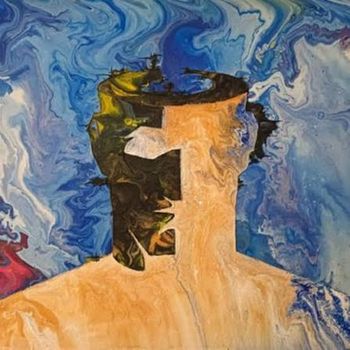
There is something wonderfully appropriate about the name Aether. In classical thought, it was the mysterious substance that filled the heavens; here, it becomes an equally useful description of the space occupied by Aether III—music that seems to exist somewhere between genres, refusing to settle comfortably within any one of them. The Italian quartet of Andrea Ferrari (guitars, keyboards), Andrea Grumelli (fretless bass), Andrea Serino (Fender Rhodes, keyboards) and Matteo Ravelli (drums, electronics) have created an album where Progressive Rock, Jazz and Ambient music aren't so much placed side by side as dissolved into one another. The result is an understated but remarkably detailed recording, one that rewards close listening rather than demanding immediate attention. The opening Oort Cloud sets the tone beautifully. Its title suggests the distant, barely visible frontier of our solar system, and the music has a similarly expansive quality. Ferrari's guitar work isn't about conventional prog-rock heroics; instead, phrases emerge from an atmospheric backdrop, while the fretless bass provides a wonderfully fluid counterpoint. Serino's Rhodes adds that unmistakable ECM-adjacent warmth, giving the track an almost weightless quality. There is motion here, but it is motion without obvious destination. Vogon introduces a little more rhythmic definition. The title might suggest something more playful or overtly sci-fi, but Aether aren't interested in turning the track into a caricature of space music. Instead, shifting rhythmic patterns and electronic textures give the piece a slightly unsettled character. Ravelli is particularly important here, his drumming balancing the improvisational instincts of Jazz with the structural requirements of Progressive Rock. The extraordinary Cinq Teintes, Quatre Cadres is where the album's ambitions become most apparent. At almost nine minutes, there is room for the quartet to develop an idea rather than simply present it. The composition moves through contrasting textures creating a remarkably sophisticated harmonic palette. What makes Aether interesting is that they understand that quiet can be progressive. There is no requirement for every musical idea to culminate in a massive Mellotron chord or a virtuoso guitar solo. Sometimes the progression is in the texture itself: a subtle change in harmony, a bass line taking an unexpected direction, a rhythmic figure gradually becoming more prominent. This is Progressive Rock stripped of some of its traditional theatrical baggage. La Mélancolie Du Petit Prince is perhaps the album's most immediately evocative piece. The title is certainly suggestive, and the music lives up to it without becoming sentimental. The melodic writing has a fragile, almost cinematic quality, while the combination of piano and fretless bass creates a beautiful sense of melancholy. There is something here that brings to mind the more reflective side of Pat Metheny, particularly when his music becomes less about jazz-rock virtuosity and more about atmosphere and melody. Then comes Panta Rei, whose title—everything flows—is almost a manifesto for the album. Grumelli's fretless bass is particularly effective, gliding beneath the music rather than merely supporting it. The rhythmic framework is constantly shifting subtly, while the keyboards create layers that seem to appear and disappear in the mix. The piece demonstrates how effectively Aether can create complexity without making the music sound complicated. The album closes with the ten-minute Swerve, appropriately the most expansive piece on the record. Here the quartet have the opportunity to stretch out, and they take it. Electronics and acoustic instrumentation coexist naturally, while the rhythm section provides a flexible foundation for the guitars and keyboards. The piece feels less like a conventional finale than a gradual departure into the same atmospheric space from which the album began. And that is perhaps the greatest strength of Aether III. It isn't an album particularly interested in showing you how clever its musicians are, even though the musicianship is undoubtedly impressive. Instead, the technical ability is placed at the service of atmosphere and composition. Ferrari's guitar playing is restrained but expressive, Serino's Rhodes is central to the album's sonic identity, and Grumelli's fretless bass provides a wonderfully elastic foundation. Ravelli deserves equal credit, because his drumming avoids the trap of treating progressive music as an excuse for perpetual rhythmic gymnastics. His use of electronics further expands the quartet's sonic vocabulary without making the music feel artificially modern. There are certainly recognizable reference points. The ECM tradition is an obvious one, particularly in the use of space and the importance given to timbre. There are also traces of Post-Rock, Ambient, contemporary Jazz and the more atmospheric end of Progressive Rock. At times one might think of Tortoise, The Bad Plus, Bill Frisell, or even some elements of Centipede without the dissonant woodwinds—but Aether never sounds like a tribute act to any of them. The ambient elements never overwhelm, the jazz harmonies never get smug, and the prog rhythms never turn into math homework. It's a rare balance: sophisticated without being pretentious, atmospheric without being sleepy. Instead, Aether III occupies its own rather intriguing territory. This is music for listeners who appreciate the spaces between notes as much as the notes themselves. It is progressive without being bombastic, jazzy without being overly improvisational, and ambient without disappearing completely into abstraction. Most importantly, it understands that these three musical languages can complement each other remarkably well when handled with imagination. Aether isn't trying to reinvent the wheel — they're trying to see what happens when you replace the wheel with a shimmering, rotating cloud of harmonies and rhythmic particles. And somehow, it works. Aether III offers a fascinating journey. Don't expect instant gratification; this is an album that reveals itself gradually, like distant stars becoming visible as the surrounding sky grows darker. And once you enter Aether's orbit, it's surprisingly difficult to leave. **** David Carswell Where to buy? |