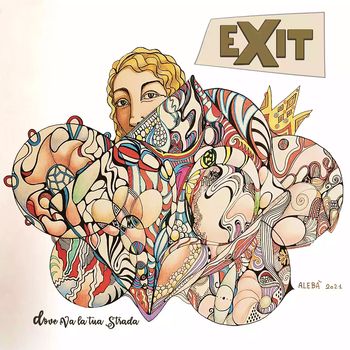
Dove Va la Tua Strada? is the only album by the Italian progressive rock band Exit, originally recorded in 1973 but left unreleased for over 50 years. Often described as a "lost jewel" of the 1970s Italian prog scene, the album was finally brought to light and officially released in early 2026 by the specialized label Black Widow Records. The album was recorded by the little-known Exit in 1973. They originally came from Trieste and consisted of bassist Paolo Bassi, formerly of the Witz Orchestra and other local jazz groups, and guitarist Goran Tavčar, who had played for the Yugoslavian Kameleoni and would later play on Gino D'Eliso's Il mare, on the two Boomerang albums, and in other lesser-known Yugoslavian groups; drummer Euro Cristiani had served under Patrick Samson (a Lebanese singer who became a French citizen and later moved to Italy in the mid-1960s, where he recorded four albums and several 45s). He later became a popular session musician, appearing on numerous Numero Uno recordings, collaborating live with Adriano Pappalardo, Umberto Tozzi, Oscar Prudente, and Ivano Fossati; the lineup was completed by lead singer Ilario Sfecci, the only member with no criminal record whatsoever and who had not pursued an artistic career after the group's dissolution. The album combines symphonic influences with raw guitar parts and melodic keyboards, typical of the Italian progressive rock scene of the seventies. The sound is richly arranged, with complex rhythms and compelling vocals, making the album feel both energetic and melancholic at the same time. Featuring complex interplay between guitar, bass, and drums. At the same time the album, recorded in Trieste, features a blend of hard blues rock, progressive rock, and jazz-rock with Italian vocals. Let's go through the tracks one by one to give you a better indication what to expect. Dove Va La Tua Strada? - The album opener does not reveal much of what comes later on. But you can already hear that the musical talent is present. The interplay is highly praised, specifically Goran Tavčar's visceral guitar, Paolo Bassi's jazz-influenced bass, and Euro Cristiani's dynamic drums. Lassù Dove Vai - Here are for the first time the real progressive rock influences are present. A band such as Yes might have been an inspiration. Most of all the bass and harmony vocal parts are reminiscent. La Sfera - Here the band sounds like Deep Purple and might have been another inspiration for the musicians. Corri E Fuggi - Again the influences of Deep Purple and Yes comes to the surface. Most of all the bass parts sound very important here! Ti Risvegli - The epic piece on the album is twelve minutes long and without any doubt the musical highlight on the album. You can hear Yes, Deep Purple and Led Zeppelin in their music. Grandi Regni - The final song is also a great track in which Yes and Deep Purple go hand in hand music wise and ends the album in a perfect musical way! Dove Va la Tua Strada? by Exit might be considered essential for Italian prog completists, though perhaps challenging for others. It is highly regarded as an unrepeatable glimpse into 1970s Italian music and can be compared to Italian bands like Spettri or Garybaldi. But also, Deep Purple, Yes and Led Zeppelin as I mentioned earlier. Certainly, a lost gem! ***+ Henri Strik (edited by Dave Smith) Where to buy? |