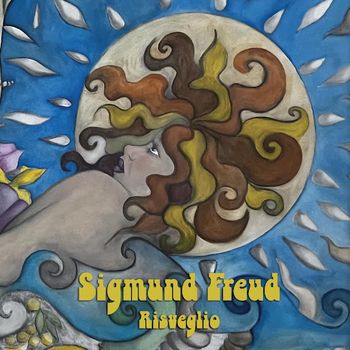
Sigmund Freud was born during a splendid summer in 1972. They immediately drew inspiration from the progressive rock of the moment, creating songs with an original, personal, and lively musicality. Until 1978, they performed at numerous rock concerts and gatherings held in the capital, the Roman hinterland, and numerous Italian squares. In Rome, during the September 2025 edition of Music Day, Sigmund Freud presented their first album Risveglio (songs that were recorded in 1975 but never released) in collaboration with the record label Black Widow Records of Genoa (Italy). "We wanted to re-propose the songs as we played them in the '70s, to capture and convey the same sensations that inspired us in composing them and others we've created in recent years." This is Sigmund Freud's current adventure. So all that's left to do is go listen and take a journey through time with them, experiencing the magic that only music can provide. The band features Claudio Ciuffa on electric guitar, acoustic - and classical guitar, flute and soprano sax, Marco Cavaterra on electric - and acoustic bass, Luca Allori on lead vocals, acoustic guitar, 12-strings guitar and devices, Dino Pacini on electric guitar, acoustic- and classical guitar, Evandro Gabiati on drums and percussion and Claudio Carbonetti on pianoforte, Hammond organ, Mellotron, Solina string-ensemble and Minimoog synthesizer. Italy was the first country outside the UK that acknowledged the quality of Genesis in the early 70s, Sigmund Freud is one of the many bands that were inspired by their unique sound, a blend of folk with acoustic guitars, flute and Mellotron violins and rock with harder-edged guitar and powerful Hammond. From the first moment I am very pleased with Sigmund Freud featuring a melodic and harmonic sound and good musicians. The music is firmly rooted in the genuine symphonic rock tradition but the band also delivers many fine own musical ideas. Fiori Di Polvere Bianca: Lots of flowing shifting moods, from dreamy and a slow rhythm to a mid-tempo and bombastic. This is topped with strong native vocals and embellished with tasteful work on guitar (acoustic and electric), flute, Hammond, Mellotron (brass, choir violins) and Minimoog (a flashy solo with pitchbend), and backed by a dynamic and powerful rhythm-section. Giochi D'ombre: First dreamy vocals, in a mellow atmosphere, what a wonderful pastoral sound with slow synthesizer flights and moving electric guitar. Then again many changing atmospheres: an accellaration with fiery guitar solo and a tight beat, mellow with emotional vocals and flute, and a swinging rhythm with Hammond, powerful vocals, and fiery electric guitar solo, fueled by a dynamic rhythm-section. Palla Di Neve: It starts mellow with twanging acoustic guitar, Mellotron violins, flute, and dreamy vocals. Next a hypnotizing build-up, inspired by the classical piece Asturias (from Isaac Albeniz), culminating in bombastic atmosphere with distorted guitar, Mellotron violins and passionate vocals. Then majestic Mellotron violins and a distorted electric guitar solo (wah wah pedal) and rhythm guitar, and another wah wah drenched guitar solo. Finally choirs, powerful vocals and a propulsive rhythm-section, topped with a moving guitar solo and use of the wah wah pedal. La Quiete Dopo La Tempesta: First a mellow start, then a bombastic climate with rock guitar and Hammond organ. The music turns into a slow rhythm featuring Hammond, moving guitar and strong vocals, culminating into a long and compelling part with the focus on a moving and distorted guitar solo, with howling runs, Hammond and propulsive rhythm-section, wow! Halfway a mid-tempo with a tight beat and rock guitar, and Hammond, it sounds very dynamic. Then back to a dreamy climate, with wonderful vocals, followed by an intense part featuring again a howling guitar solo with lush Mellotron violins. Finally Hammond arpeggios, in a slow rhythm, with subtle intense guitar runs, what a tasteful and varied sound. Epilogo: After a dreamy intro, strong interplay, with Hammond, again the Asturias hints, and then moving guitar and Mellotron violins, embellished with flute and warm vocals. Next powerful vocals and a swirling Hammond solo, then a slow rhythm and powerful vocals. Now the music turns into a swinging rhythm with growling bass and powerful Hammond. Next an atmospheric part, it contains a story telling voice, and sounds hypnotizing. Finally swelling Mellotron violins and twanging electric guitar (strongly evoking early Genesis), topped with military drums and slowly fading Mellotron violins, a good example of the fine musical ideas of this band. Bonus track Freud 70's Medley: Musically this is an interesting, typically 70s Italian progrock suite but the recording quality is between mediocre ad poor, level "only for collectors'. ***+ Erik Neuteboom (edited by Tracy van Os van den Abeelen) Where to buy? |