|
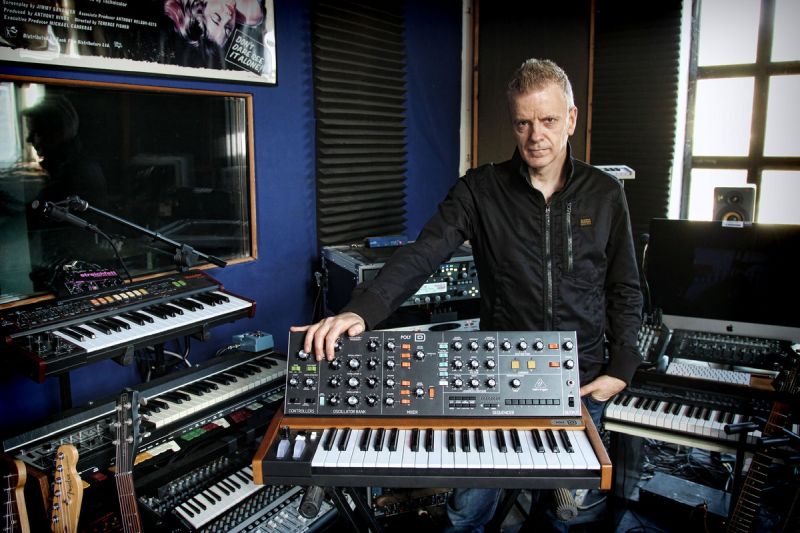
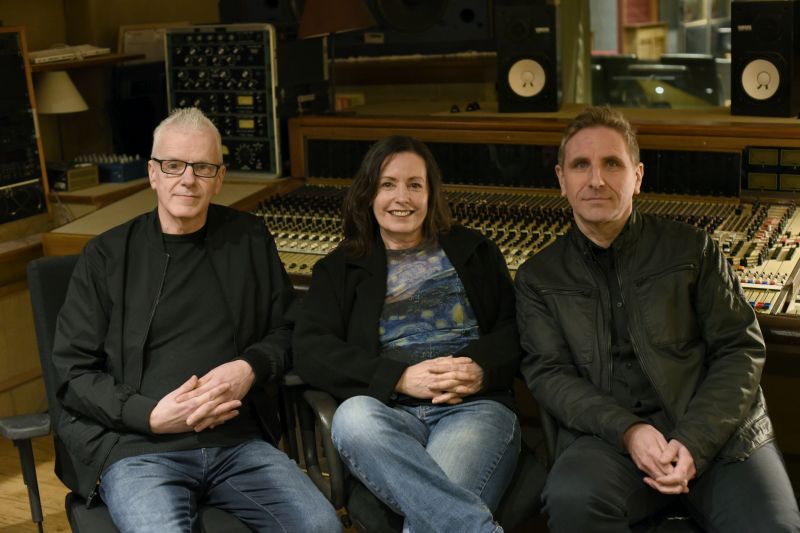
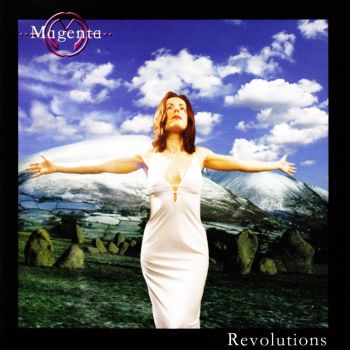
Interview Robert Reed (Magenta) "Tarot is the most consistent and coherent Magenta album we have made" (text Henri Strik, edited by Peter Willemsen, pictures delivered by the band) Magenta was initially a solo project by multi-instrumentalist Robert Reed. Their debut album Revolutions was released in 2001. Many albums followed this strong debut. Their latest album Tarot is the eleventh studio album. Robert Reed, together with singer Christina Booth, always showed their admiration for Annie Haslam and her band Renaissance. And as is the case with many bands, there comes a time when they return to their original interests: sounding like Renaissance. This is what happened on the latest album Tarot, so the editorial staff of Background Magazine was very curious to learn how this all came about. Congratulations with delivering an excellent album and with the 25th anniversary of Magenta as well! Tarot can be seen as the successor to Masters Of Illusion because the previous album The White Witch was an orchestral album. Am I right?
When did you start writing and recording the album? "I started writing about two years ago. We have done ten albums so far and we are always looking for something different. For Tarot, we went back to what was the original template for Magenta. I'm a huge fan of Renaissance, and when we first started Magenta, that band was our inspiration. We wanted a female fronted progressive band, as there were very few around at the time. My idea is that each Magenta album must be different. Once we had the sound of the album, mixing orchestra with a rock band, and featuring more guitar work than Renaissance ever did, it was easy to write the songs." While composing the album, you took Christina's voice into account. Did you do this because problems always arose afterwards with previous albums? "Yes, most bands write songs and make the mistake of doing all the arrangements and recording before the singer comes into view. If the song is in the wrong key, it's very hard for the singer. So, throughout the writing and recording we constantly checked, and adjusted the music to fit Tina's voice." Did it pay off to write the songs this way? Was it easier for Christina to sing the songs? "Yes, it was. The resulting singing is some of the best that we have on record from Tina. I also wrote with her voice in my head, so I could imagine what it would sound like." Christina sounds amazing on the new album. I read somewhere that you compare her to a fine wine that gets better with the passing of the years. "I'm not sure I said that, but it's true. The voice changes as you get older. It's much deeper in tone, which sounds great when put up front in the mix. And that is exactly what I did on Tarot. It's all about Tina's singing; it's the most important part." You also wanted the album to sound more like Renaissance again. Did you have the idea that on the recent albums Magenta no longer sounded like Renaissance? "Yes, but as I said, each Magenta album must sound different. Metamorphosis for instance, is a harder album." One can hear many musical parts sounding like an orchestra, just as on some albums by Renaissance. However, no orchestra is mentioned in the credits. Does this mean that you extracted these sounds from a keyboard or computer? "There were some real orchestral instruments, like the oboe and the flute. I've used real orchestras in the past.
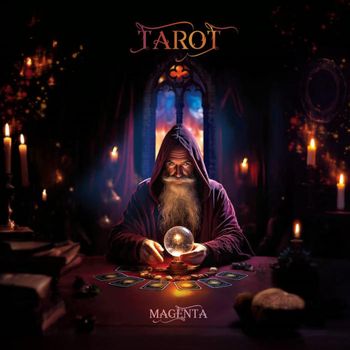
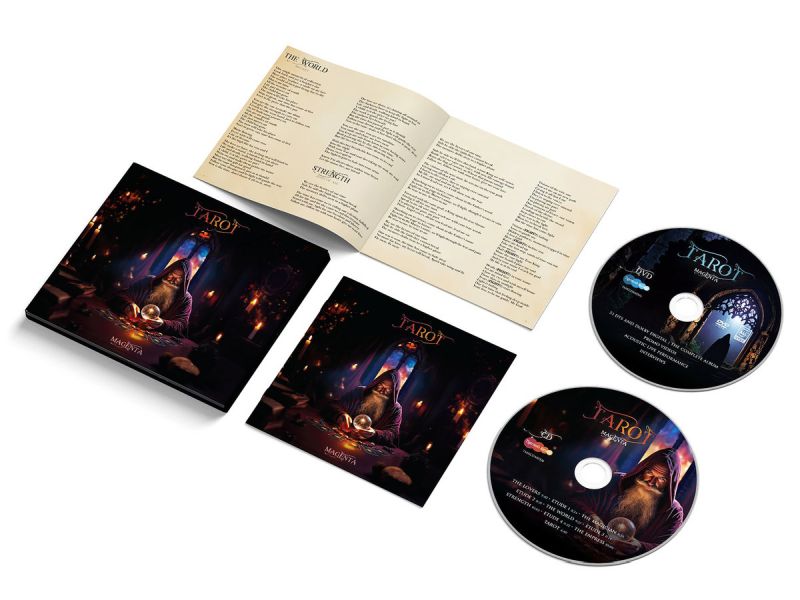
The album is inspired by the tarot cards. This subject was also used in the past by acts such as Steve Hackett, The Enid and Mike Batt. However, it strikes me that your songs deal with completely different cards. Is that a conscious choice? "No, the theme of the Tarot cards came late in the making of the album. I had six songs about characters, and we looked for a way to link them. The idea of Tarot cards and picking one for each character to reflect their lives really worked for us." Additionally, a fictional or non-fictional person is assigned to each album track except for the title track. What was the reason for doing it this way, and can you explain why you chose these people? "As I explained, originally I had six tracks without the lyrics. When I listened to the individual tracks I thought what era and what time in history they reminded me of. I wrote these names down, gave them to my brother, and asked him if he was willing to come up with an interesting story for each character." Did you write the music before the theme was known, and who came up with the album's theme: you or your brother Steven? "It's always the music first, and then the melody. I just sing some meaningless words to get the phrasing. After that, my brother writes the lyrics and the story which of course, have to align with my ideas." What strikes me are your strong bass parts probably inspired by Jon Camp. Why did you play these parts yourself? Did you want the same bass sound? "Well, the bass guitar is my favourite instrument to play. I'm a huge fan of bass players who use the bass as a lead instrument. Obviously, Chris Squire (Yes) is the most striking example, but Jon Camp (Renaissance) also. He was more or less overlooked, but his work on the albums of Renaissance is absolutely amazing. I spoke to him before he passed away, and I told him what a major influence he and Renaissance were for Magenta."
"When I listened back to the album, I found it too dense and hard to listen to six long tracks after each other. The album needed to breathe between the tracks, a kind of musical pallet cleanser. So, I asked Chris Fry, who is also a trained classical guitarist, to add five short pieces based on the themes from the following tracks. These etudes couldn't be too long as they would otherwise disrupt the flow of the album. It really works in the running of the complete album." Chris Fry's guitar play sometimes sounds like Steve Howe in the seventies. Do you agree? "No, this time I disagree. Usually, we sit down when we record the album. Then we asked ourselves: how about a bit of Steve Howe, David Gilmour or Andy Latimer, but for Tarots I just said to Chris: play whatever you feel. Lots of the solos are first takes, and they sound really fresh." You didn't use the rhythm section we usually see on stage. Why not, and what was the reason you asked Nick D'Virgilio for the drum parts? "Well, I like to use different drummers, and I've been lucky to work with some of the best, like Simon Phillips and Gavin Harrison. I worked with Nick D'Virgilio on the reissue of Spectral Mornings (Steve Hackett, 1979, HS) with the late David Longdon of Big Big Train. So, I new Nick. He brought a real power and groove to Tarot. There are many up tempo tracks, which we didn't do that much on earlier albums." I also heard beautiful contributions from flautist Katie Axelsen and oboist Sam Baxter. Who are they, and why did you ask them? "Katie Axelsen and Sam Baxter regularly played with us during live concerts. In order to add more realism to the records I like to use real soloists. The oboe and the flute are very important on this album."
"I play with Pete Jones in Cyan and with Steve in Chimpan A. They both are amongst the best vocalists in progressive rock music now. They both happen to be in the studio when I was working on the album, and I loved the idea of blending their voices with Tina's. It's a special moment on the title track." Once again, we can enjoy your amazing synthesizer solos. Did your fans ask for them, or do you like to play solos yourself? "I only play a solo if the track needs it. I'm not a fan of the technical side of prog, but I like music to have a melody. Even the solos should be catchy and memorable. Tony Banks was a real master in this field. I play less Moog solos on Tarot because I wanted the orchestra to shine and carry the solos. We also doubled the guitar solos with the orchestra, so it all joins together to have one uniform sound. That is why Tarot is the most consistent and coherent Magenta album we have made." Are you going to play Tarot in its entirety during live performances, and if so, when will we see Magenta playing live again? "Yes, we are planning two shows next year with a small orchestra and an expanded band to recreate the new album and celebrate 25 years of Magenta." Thank you Robert for answering all my questions. "You're welcome." Website bandcamp Magenta: review album 'Seven Special Edition' [2009] review album 'Chameleon' [2011] review album 'The Twenty Seven Club' [2013] review album 'Live: On Our Way To Who Knows Where' [2013]
review album 'Chaos From The Stage' [2016] review album 'We Are Legend' [2017] review album 'We Are Seven' [2018] review album 'Masters Of Illusion' [2020] review album 'Tarot' [2026] review DVD 'Seven Special Edition' [2009] review DVD 'Live at the Point' [2009] review DVD 'Live At Real World' [2010] review DVD 'Chaos From The Stage' [2016] review DVD 'We Are Seven' [2018] review DVD 'Acapela 2016 &2017' [2019] Robert Reed: review album 'Sanctuary' [2014] review album 'Sanctuary II' [2016] review album 'Theme From Dr Who' [2018] review album 'Cursus 123 430' [2020] review album 'Sanctuary Covered' [2024] review DVD 'Sanctuary II' [2016] review concert Zoetermeer (NL) 10-Apr-2009 |